Same guitar, same drum kit, three arguments
Three genres came out of the same four years and refused to be the same thing
Post-punk was a method, not a sound. Goth and darkwave are what happened when two separate parts of that method decided atmosphere was the point.
Named on this page
- Wire
- Gang of Four
- Britannia Row
- Martin Hannett
- Joy Division
- Strawberry Studios
- Bauhaus
- Beck Studios
- Factory
- 4AD
- Mute
- Roland TR-808
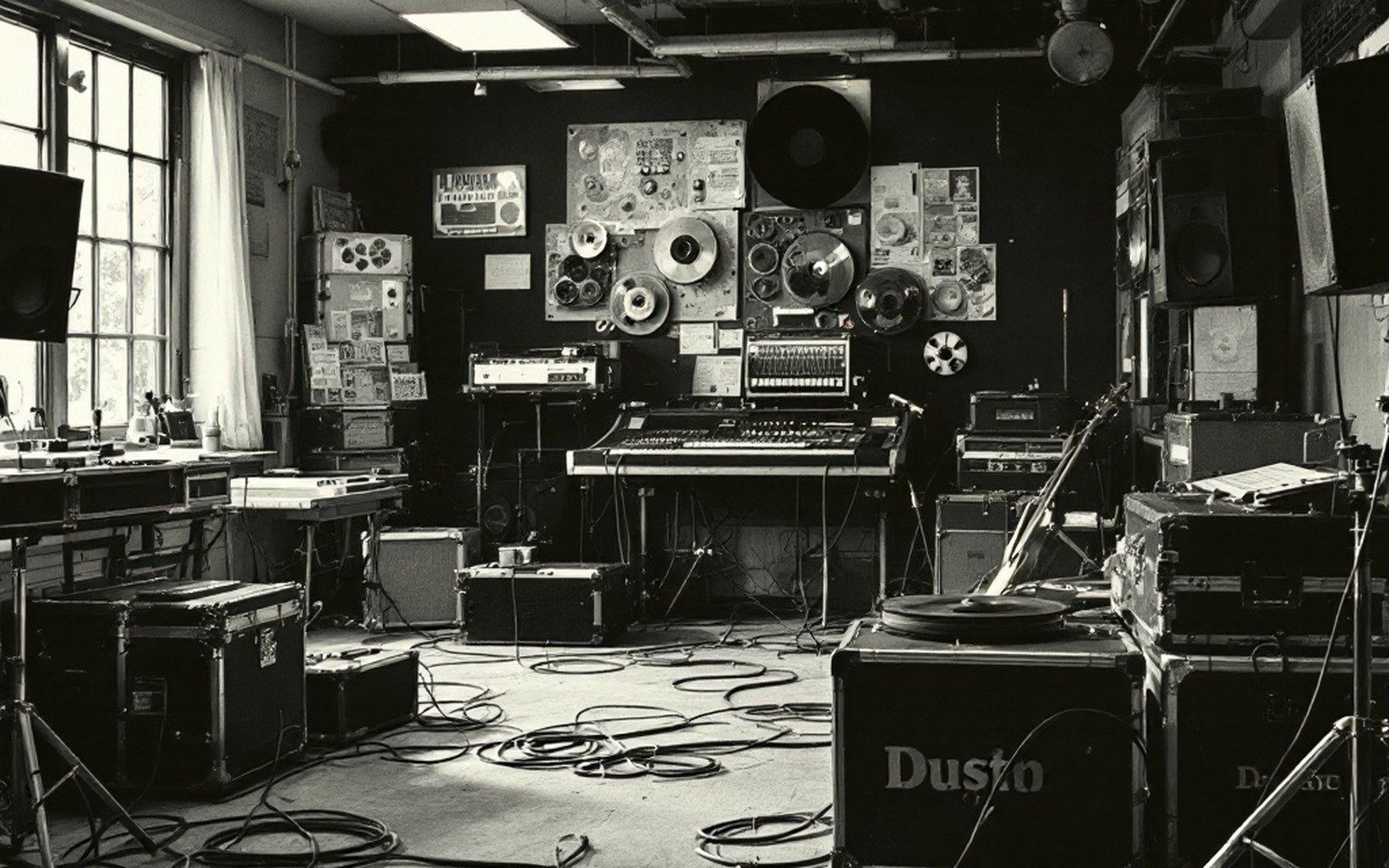
The same four years, the same rooms, the same four-piece
Between roughly 1978 and 1982, a cluster of recording decisions settled into three recognisable aesthetics, and the strange thing is how close their origins are. Post-punk, goth and darkwave were not sequential movements, each reacting to the one before. They overlapped almost completely in time, shared studios, shared engineers, and in several cases shared personnel. What separated them was not era but emphasis — what each decided to do with silence, with guitar, and with the rhythm section that punk had stripped back to its most functional.
The shared starting point is worth naming precisely. Punk had enforced a particular instrumental vocabulary: one or two guitars run relatively dry, bass locked to kick drum, drums hit hard and forward in the mix, vocals declarative. Post-punk inherited every piece of that vocabulary and then made different decisions about what to put in the middle — what texture to place between the beat and the lyric, how much room to leave unfilled. That decision — whether to fill the space or let it sit — is the first fork in the road.
Post-punk, in its 1979–81 form, used the space as structural material. Wire’s 154, recorded in 1979, treats absence as composition: where a rock arrangement would layer, 154 subtracts. Gang of Four’s Entertainment!, cut at Britannia Row in London the same year, keeps the guitars jagged and percussive but deliberately hollow in the low-mid frequencies, making the bass and drums load-bearing in a way they had never been in classic rock. The method is one of deliberate refusal — refusing warmth, refusing the crescendo, refusing the part that would conventionally arrive to fill out the chorus. Post-punk is, in this sense, an argument conducted with rock production conventions rather than a replacement aesthetic.
The same tension, resolved three ways
| Position | What it did with the middle of the record |
|---|---|
| Post-punk | Kept the structural tension unresolved; used space as argument rather than atmosphere |
| Goth | Heavy plate reverb on live drums; guitars sparse or removed from centre; bass carrying the harmony; the room made artificially large and cold |
| Darkwave | Drum machine as primary rhythmic source; chorus pedal on bass; delay in place of plate; synthetic reverb replacing expensive studio hardware |
Table scrolls sideways →
Where goth took one corner of that argument
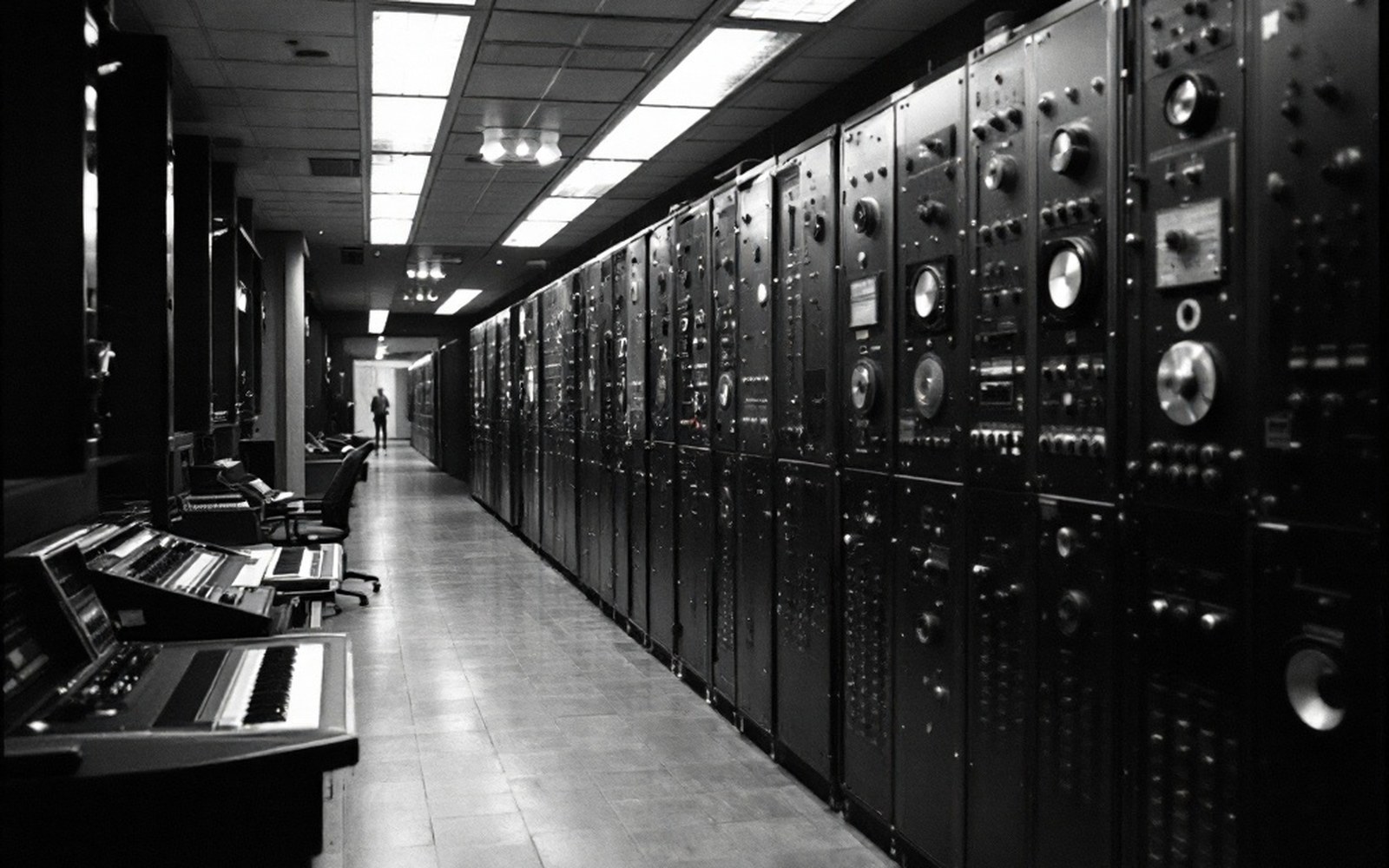
Goth emerged not by rejecting post-punk’s method but by accepting one of its results and then amplifying it past the point of argument into something closer to atmosphere. The key transition was what reverb did to the rhythm section once engineers began using it at scale. Martin Hannett’s work with Joy Division at Strawberry Studios in Stockport — particularly Unknown Pleasures, released on Factory Records in June 1979 — demonstrated that a drum kit treated with heavy plate reverb and placed in an artificial acoustic space could sound less like percussion and more like weather. What a plate reverb physically does to a signal is suspend it: the steel sheet’s decay time smears transients across time, so a snare hit becomes a bloom rather than a crack, and the room implied by the sound is larger and colder than any room the band actually occupied. Hannett took that logic and extended it across the entire mix, not just the drums — pulling guitars out of the centre and letting the reverb tail fill what they left behind.
Bauhaus recording Bela Lugosi’s Dead in a single pass in 1979 at Beck Studios in Wellingborough arrived at something similar from a different direction. Where Hannett was a producer imposing a philosophy on a band, Bauhaus were making a deliberate performance decision: tempo slow enough to let every reverbed element breathe, guitar sparse enough to function as punctuation rather than texture, bass carrying almost all of the harmonic weight. The nine-minute take made post-punk’s negative space into the entire subject of the record rather than a compositional tool. That shift — from space as method to space as content — is probably the most useful technical definition of where goth diverges from post-punk.
From space as method to space as content
By 1980–81, the labels that would crystallise the aesthetic were already forming around it. 4AD, operating from Wandsworth in south London, released records by the Birthday Party and Bauhaus that leaned into visual and sonic darkness as an explicit programme — the label’s approach to sleeve design doing as much genre-defining work as the recordings themselves. The sonic signature ran to high treble shimmer from reverbed guitar (often a clean Rickenbacker or semi-hollow body through a chorus pedal and then into plate reverb), low resonant bass, and drums that were either heavily processed to sound huge or deliberately minimal to sound skeletal.
Where darkwave took the other corner
Darkwave arrived at atmosphere by a different route: through the drum machine rather than through reverb on live drums. Once programmable rhythm units became cheap enough to function as primary instruments rather than studio aids — the Roland TR-808 appearing in 1980, with the CR-78 and Korg Rhythm units already in circulation before it — a different kind of negative space became available. The machine produces a beat with no room sound attached, no bleed, no human micro-timing. Its precision is also its blankness, and that blankness changed the social dynamics of how a band could work as much as it changed the sound.

What darkwave producers and self-recording artists found was that a machine beat, run through a chorus pedal on the bass line and underneath a guitar part treated with a delay pedal rather than simply reverb, produced something that felt electronic without being straightforwardly synth-pop, and felt cold without the rock instrumentation of goth. The chorus pedal, the cheap machine and the delay pedal account between them for a surprisingly large proportion of what darkwave actually sounds like on tape. Mute Records’ releases in London from the early 1980s captured several variants of this combination, as did the contemporaneous West German scene — particularly the releases clustered around Düsseldorf and Hamburg labels — which arrived at similar sounds through similar economic logic: inexpensive equipment, small studios, a preference for electronic over acoustic texture.
The production decisions that define darkwave are, accordingly, less about a particular kind of room and more about a particular kind of signal chain applied after the take: heavy chorus on bass and sometimes guitar, delay used to create rhythmic repetition rather than just ambience, and synthetic reverb replacing the plate because the plate was expensive studio hire and a cheap digital reverb unit was not. Those are real economic differences showing up as aesthetic ones, which is usually how genre actually works.
Key studios and labels
| Place | What was made there |
|---|---|
| Strawberry Studios | Stockport — Joy Division and Martin Hannett sessions; Unknown Pleasures (Factory Records, FACT 10, 1979) |
| Beck Studios | Wellingborough — Bauhaus, Bela Lugosi’s Dead, 1979 |
| Britannia Row | London — Gang of Four, Entertainment!, 1979 |
| Factory Records | Manchester — the FAC catalogue, which numbered every object the label produced |
| 4AD | London — sleeve-led identity; the Birthday Party, Bauhaus |
| Mute Records | London — early home-recorded and self-distributed releases |
Table scrolls sideways →
What the four years actually produced
The reason these three genres feel distinct despite near-identical start dates and overlapping personnel is that they resolved the same productive tension in different directions. Post-punk kept the tension alive, refusing atmosphere in favour of argument. Goth resolved it toward atmosphere constructed from rock instrumentation treated with increasingly heavy processing. Darkwave resolved it toward atmosphere constructed from electronic instrumentation with rock vocabulary still present but subordinated.
Each is traceable through what the labels numbered and what the runout grooves carry: Factory’s FAC catalogue logged Joy Division’s recording sessions as Factory artefacts; 4AD’s sleeve numbering made objects of its records in a way that underlined their remove from ordinary commercial packaging; Mute’s early releases were often home-recorded and self-distributed in formats that reflected the economics of their production. The historiography now grouped under “post-punk” — covering British, American and continental European variants — tends to flatten these distinctions into a single era, which is accurate about the dates and wrong about the decisions. The dates were the same. The decisions were not.
Related pages