Then the drum machine got cheap
It did not replace the drummer. It replaced the argument.
The drum machine’s real disruption was not sonic but social: it removed a negotiation from the rehearsal room and changed the minimum viable size of a band.
Named on this page
- Roland CR-78
- Roland TR-808
- Roland TR-606
- Daniel Miller
- The Normal
- Mute Records
- Depeche Mode
- Factory Records
- Martin Hannett
The negotiation that used to happen
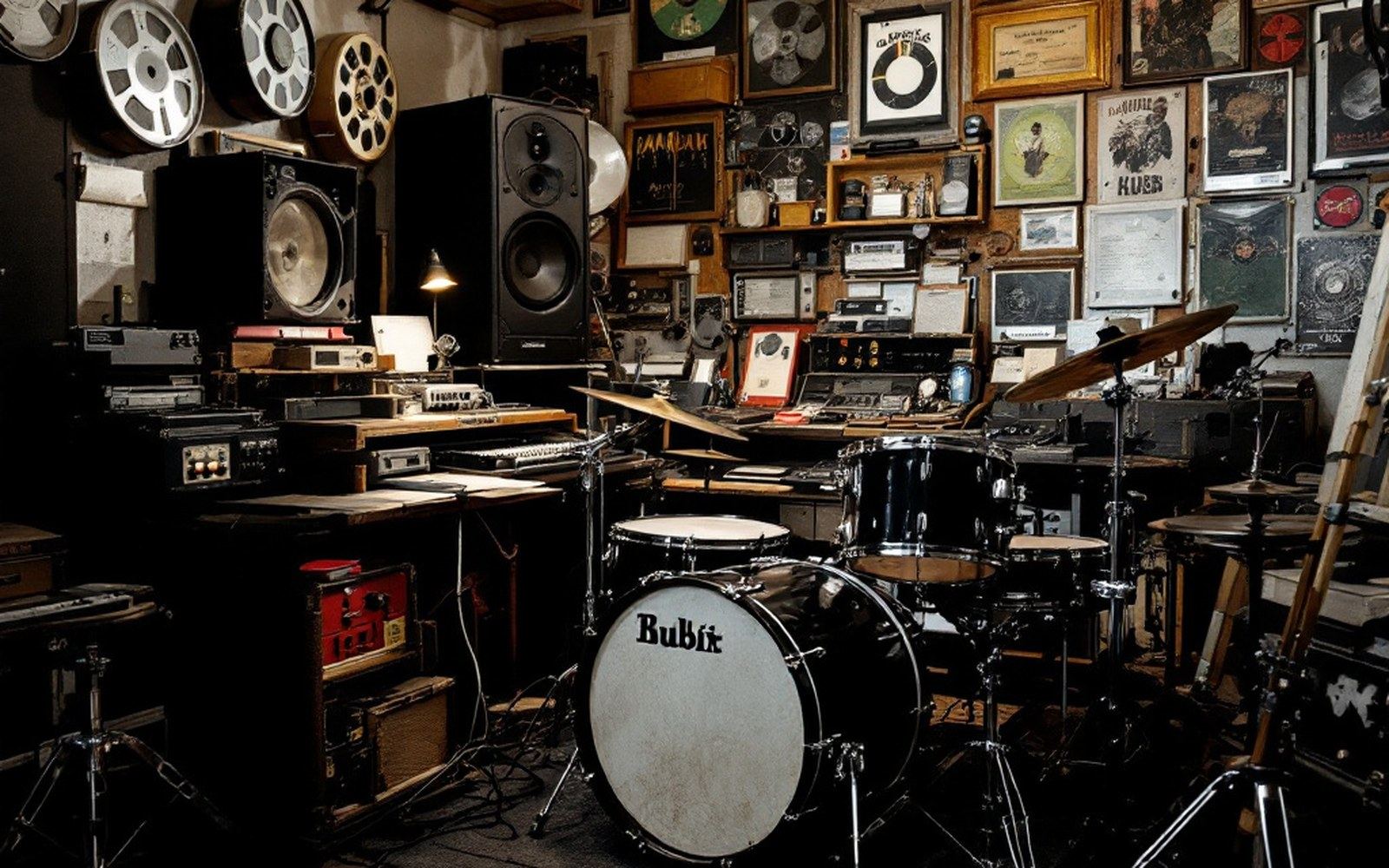
Before a drum machine was cheap enough to sit on top of an amplifier, making a record with a rhythm section meant finding a drummer, keeping a drummer, and — most pressingly — agreeing with a drummer. That last part was the friction. The drummer had opinions about tempo. The drummer wanted the chorus to breathe. The drummer had a van, which gave the drummer leverage. Rehearsal rooms in Manchester and London in the late 1970s ran on this dynamic, and the dynamic shaped what got made: songs bent toward what a human being could physically repeat, night after night, without losing patience or breaking a wrist.
Post-punk inherited this situation from punk, which had already stripped the arrangement to its studs. But stripping the arrangement did not dissolve the social contract at the kit. A faster tempo still needed a person willing to play it. A metronomic, locked-in pulse — the kind that sits under a synthesiser line without pulling against it — required either a drummer disciplined enough to suppress all swing, or a different solution entirely. Some drummers were that disciplined. Most preferred to sound like they were playing.
The rhythm machines available in the late 1970s were not yet inexpensive, but they were becoming less implausible. The Roland CR-78, released in 1978, offered programmable patterns — not just preset rhythms but sequences a musician could write. It still cost real money. The Roland TR-808, released in 1980, cost less in real terms and produced sounds that no acoustic kit made: the long, subsonic kick, the metallic snap of a closed hi-hat without the hiss of cymbals. These were not imitations of drums. They were a new proposition about what rhythm could be.
Studio chronology
- 1978Roland CR-78 released — the first widely available programmable drum machine. Daniel Miller records as The Normal using drum machines, before founding Mute Records
- 1980Roland TR-808 released — the analogue kick and snap that defined much of the era’s sound
- 1981Roland TR-606 released at a significantly lower price, moving the machine toward rehearsal-tool territory
What changed in the room
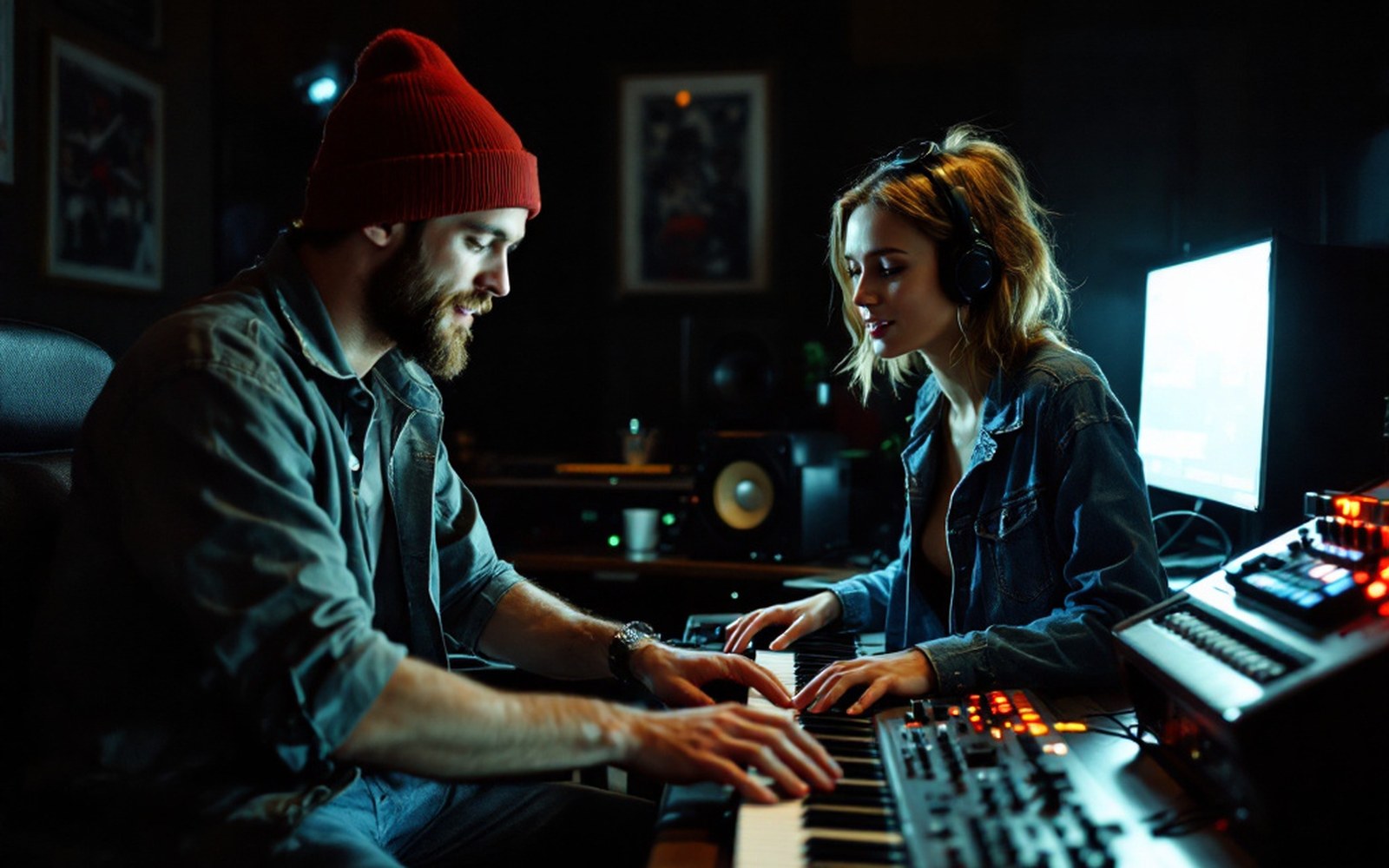
The change in the rehearsal room was not that the drummer left. It was that the drummer became optional. That shift in optionality rearranged the power inside a small band entirely. A duo could now have a rhythm section that showed up on time, did not negotiate, and held precisely the tempo written into it. The songwriter who had always been overruled about the click — too mechanical, too cold, where’s the feel — could now simply set the machine and record over it. The argument had been removed from the room. What remained was the track.
This is not a sentimental observation about drummers losing work, though some did. It is a structural point about how music gets made when one instrument’s demands no longer constrain every other decision. Bands on Mute Records in the early 1980s understood this acutely: Daniel Miller had already recorded as The Normal using drum machines before Mute signed anyone else, and the label’s subsequent roster — Depeche Mode among them — built entire production approaches around the premise that rhythm was a programmable parameter, not a personality. Depeche Mode’s early recording sessions relied on exactly this approach, the drum machine functioning less as a stand-in for an absent drummer than as evidence that no drummer had ever been part of the calculation.
Factory Records worked the same removal from the opposite direction. Martin Hannett used drum machines and triggered electronic sounds not to cut the human out but to isolate parts of the human that interested him — the attack of a snare, the decay of a hi-hat — and then to pull everything else away from those fragments. The result, across the records he made for Factory in the early 1980s, is rhythm that sounds both mechanical and anatomised: a drummer is present, technically, but the machine’s logic has already settled what the tempo will be and where the silence goes. The argument about feel was had before the session started, and Hannett won it.
The social logic
Drummer as constraint
Tempo negotiation, van ownership, and the physical limits of repeating a part night after night.
Machine as removal
Tempo becomes a fixed parameter; the programmer replaces the personality.
Minimum band shrinks
Duo and solo projects become structurally feasible below any major-label budget.
The minimum viable band
Once the drum machine got cheap enough that a musician could buy one instead of an effects pedal, it changed the minimum viable configuration of a working group. A guitarist and a bass player had always needed at least a drummer to make a rehearsable band. Now they needed a programmer. Or they needed one person who could be both, which meant that two-piece and even solo recording projects became credible at a scale below the major-label studio, in the kinds of rooms where post-punk’s bedroom logic became genuinely feasible.
The genre consequences followed the social ones. Darkwave’s characteristic spaciousness — the sense that the rhythm is happening in a larger, emptier room than any actual studio — is partly a product of recorded reverb and plate treatments, but it is also partly a product of a pulse that never varies, never rushes the fill, never demands that a vocal phrase accelerate to meet it. A metronomic rhythm does not push: it waits. That patience — structural, not performed — is one of the things that separates the feel of a drum machine track from even a very disciplined live kit. The machine is not trying to hold anything together because nothing can fall apart.
A metronomic rhythm does not push. It waits.
What it left behind
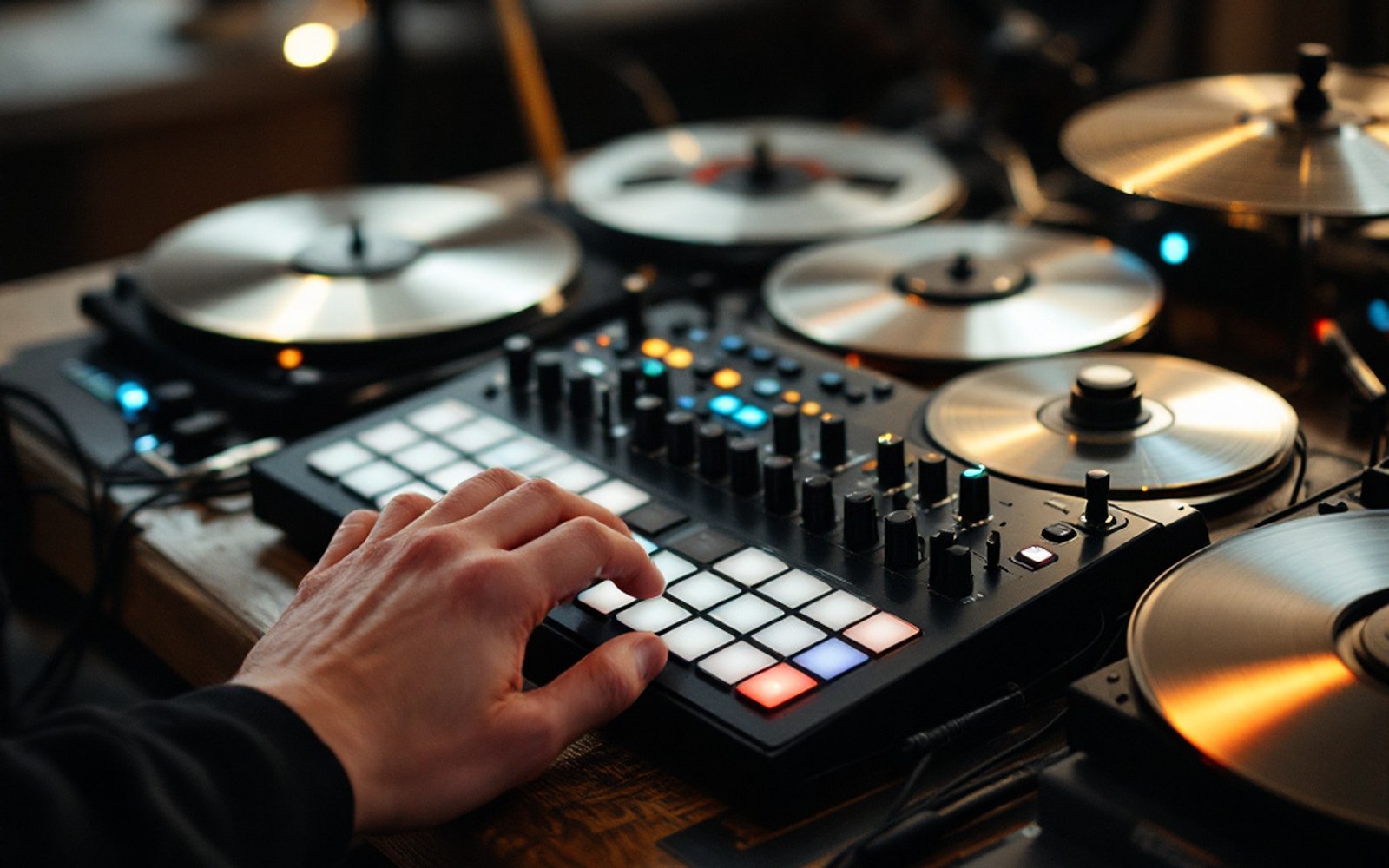
The social removal the drum machine effected was permanent in another sense: it changed who could begin. A band with a drummer required a drummer to be available, to agree to the rehearsal time, to own equipment too large to carry on public transport. A band with a drum machine required someone to own a box that fit under an arm and ran on a power adapter. The barrier was not zero — the early machines still carried real cost — but it was lower, and it kept dropping. By the time the Roland TR-606 arrived in 1981 at a significantly reduced price, the machine had become something close to a rehearsal tool rather than a studio instrument.
What this produced was not a cleaner, more efficient version of the old rehearsal-room band. It produced something different in kind: projects rather than bands, records rather than setlists, studios rather than stages. The drum machine did not replace the drummer’s hands. It replaced the set of constraints the drummer’s presence imposed on everything else. That is the machine’s actual legacy in the production history of these genres — not the sound, which is identifiable and documented, but the removed argument, which left no trace except in what got made without it.
Related pages