Then the drum machine got cheap
Then the drum machine got cheap
Once a box could keep time for the price of a guitar pedal, the drummer stopped being the one thing a band could not work around.
Named on this page
- Roland CR-78
- Roland TR-808
- Roland TR-606
- TB-303
- LinnDrum
- Martin Hannett
- Strawberry Studios
- Britannia Row
- Factory
- 4AD
- Beggars Banquet
- Mute
The cost that made it a decision
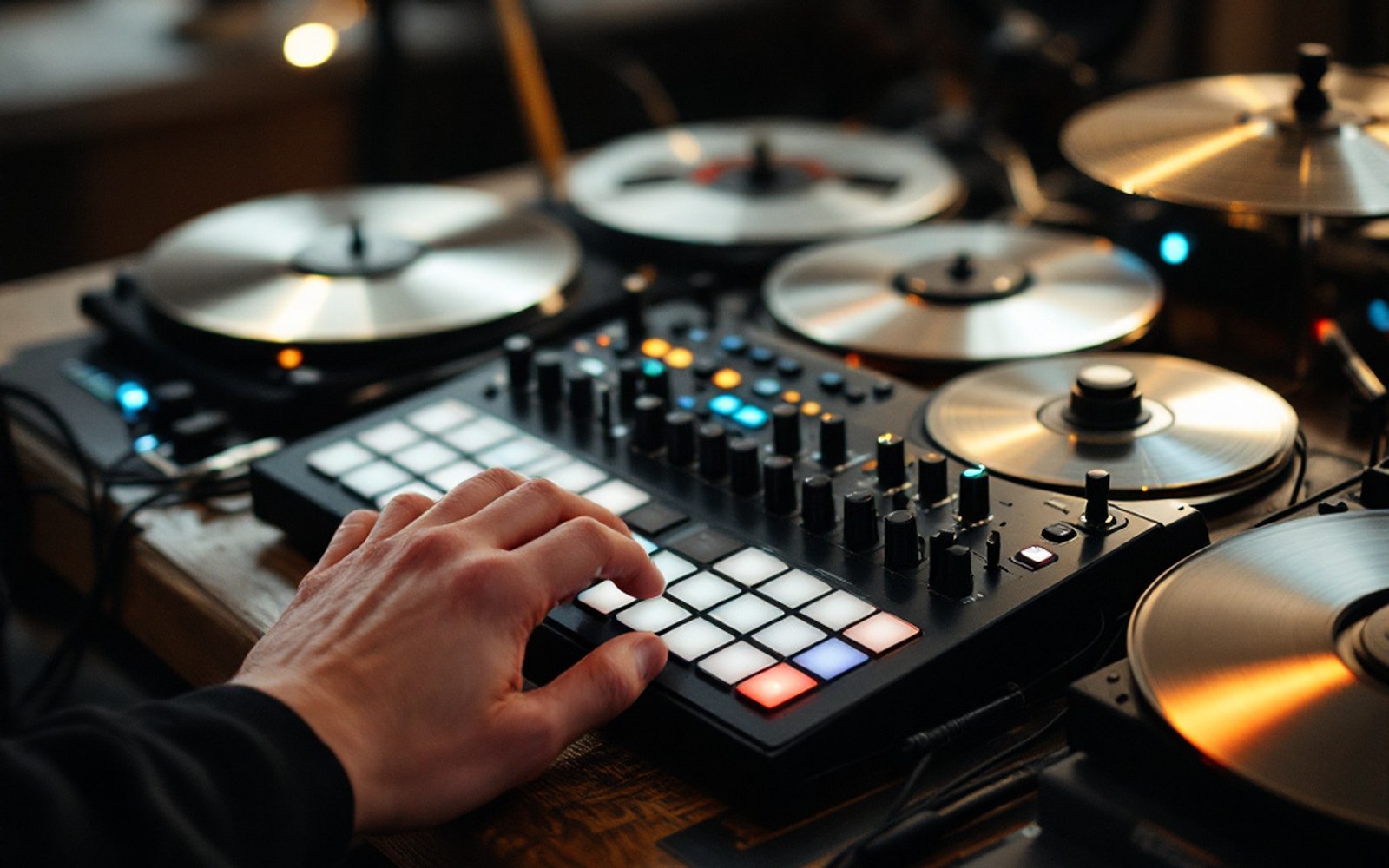
For most of the 1970s, a rhythm machine was a keyboard accessory — the kind of thing built into a home organ to approximate a bossa nova or a foxtrot. The Roland CR-78, released in 1978, shifted the category slightly: it was programmable, it was a standalone unit, and it produced a sound that bore almost no resemblance to a real kit. That was interesting rather than damaging to its reputation. But the CR-78 still cost several hundred pounds at retail, which placed it, practically speaking, in the same financial bracket as a decent second-hand amplifier — possible but not casual.
What changed the social arithmetic of the post-punk rehearsal room was not the CR-78 but what followed it. The Roland TR-808, introduced in 1980, used analogue synthesis to construct kick drums, snares and hi-hats from electronic components rather than samples of real drums. The result sounded nothing like a trap kit, and that turned out to be exactly right for a set of genres that had already decided natural-sounding recording was the wrong target. When the Roland TR-808 reached the second-hand market as newer machines displaced it, prices dropped to a level that put it alongside a chorus pedal or a delay unit — equipment a band might already own. The barrier had been price, and the price was now gone.
The TR-606, released in 1981 and designed to pair with the TB-303 bass synthesiser, pushed the threshold lower still. The 606 was never the machine that made careers, but it was the machine people could actually buy at the time, new, without making a significant financial decision. Once a rhythm unit cost less than a month’s rehearsal space, it stopped being a piece of equipment and became a working assumption.
The machines and what they cost
- Roland CR-78, 1978Programmable standalone unit; retail price placed it with mid-range amplifiers — available but not casual
- Roland TR-808, 1980Analogue synthesis, no real drum samples; became genre-defining equipment once second-hand prices dropped
- Roland TR-606, 1981Budget companion to the TB-303; the new price was low enough to make the purchase a minor decision
- LinnDrumCompeting unit entering the same market by the early 1980s; different sound character, the same logistical function
What the removal of the drummer actually removed
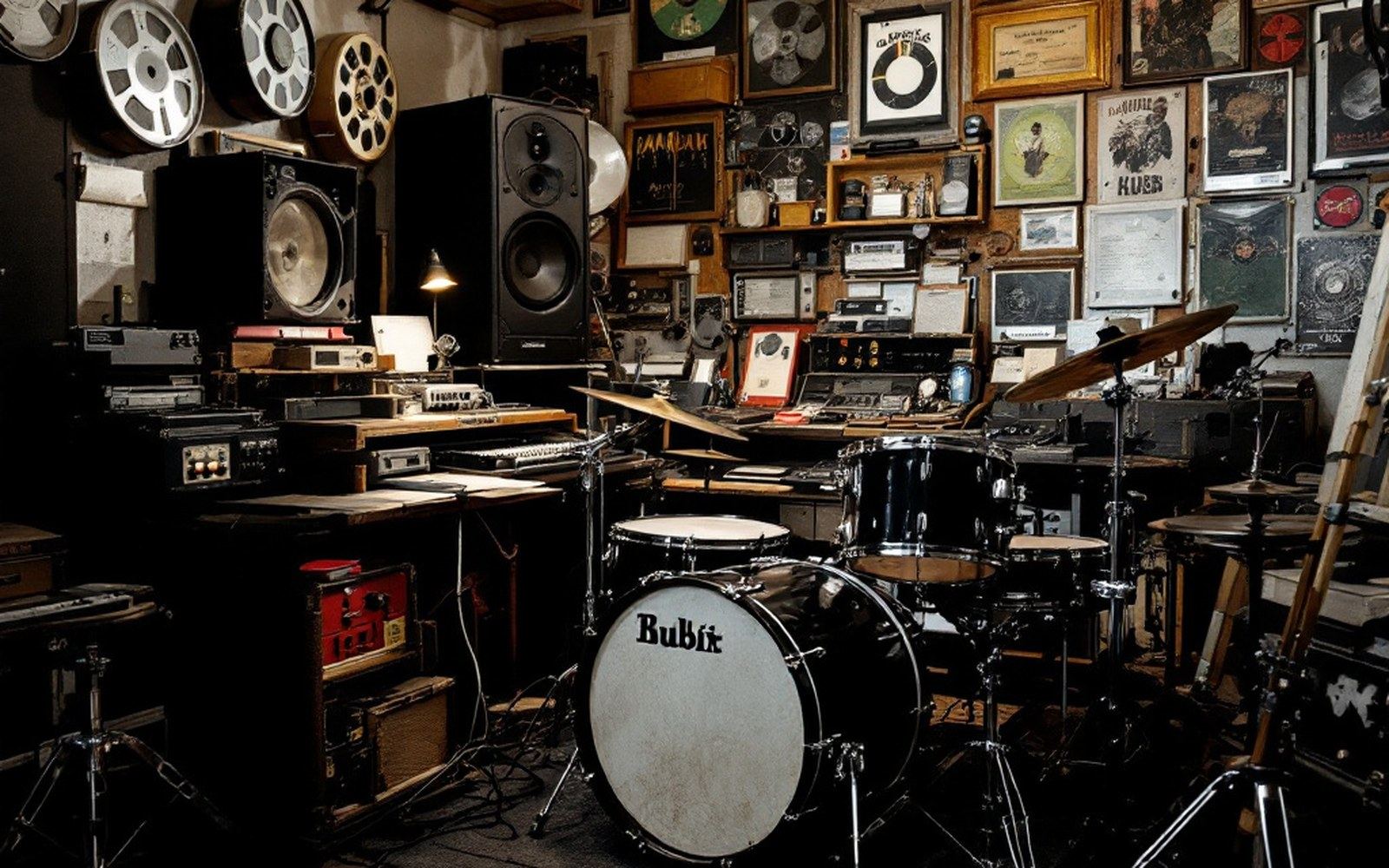
A live drummer requires a room large enough to accommodate a kit, levels in the mix that compete with everything else, a person who must show up, and a series of negotiations — tempo, feel, dynamics — that happen in real time and require consensus. None of those requirements is inherently bad, but all of them create dependencies. A band that disagrees about the tempo of a song cannot finish recording that song until the disagreement is resolved. The drummer is the person who embodies the argument, because the drummer is the argument made physical: if the tempo is wrong, someone with sticks in their hands is playing it wrong, and the room knows.
The drum machine resolved that situation by making it moot. A tempo entered into a sequencer played at that tempo, every time, without fatigue or opinion. It did not replace the drummer. It replaced the argument. A two-person or three-person unit — common in the darkwave and synth-adjacent end of the post-punk spectrum — could now function without the social infrastructure that a full band required. The bedroom became a viable studio not because recording technology changed (though it did), but because one of the structural reasons to need a larger space had been removed.
The barrier had been price, and the price was now gone
This is why the cheapness matters more than the technology. The TR-808’s sound is now so canonised that the kick drum has its own encyclopaedia entry and its waveform is recognisable at a glance. But the effect of the TR-808 on how music was made in the early 1980s was not primarily sonic — it was logistical. A factory worker in Salford or a student in Leeds could now keep time alone.
The productions that treated it as a material, not a substitute
Martin Hannett, working at Strawberry Studios in Stockport and Britannia Row in London, understood early that the drum machine was not a replacement for what it displaced — it was a different material entirely, with different properties. His productions for Factory Records in the period around 1979 to 1981 used the mechanical precision of electronic percussion not to simulate a live kit but to create space around it: the decay of a snare, the gap before a kick, the silence that a human drummer would fill with something. Hannett took the guitars out of the middle and left similar spaces there, so the percussion and the absence around it became structural, not decorative.
The 4AD aesthetic, developed through labels like Beggars Banquet and by producers working in London studios in the early to mid 1980s, found a different use for the same machines. Where Hannett used space as a presence, the 4AD approach used texture — drum machines run through plate reverb, the attack softened, the whole pattern pushed back into a wash of room sound that made the mechanical origin difficult to locate. The machine was still there, still keeping immaculate time, but it had been disguised as atmosphere. What a plate reverb did to a live snare, it did equally well to a TR-808 — and because the machine’s timing never wavered, the reverb tail could be longer without the mix becoming incoherent.
Mute Records, operating from a position that was always closer to electronic and industrial production, took the machine’s inhuman consistency as the point rather than something to apologise for or conceal. The grid was the grid. Tempo was a fact, not a feeling. This was a philosophical position about what recorded music was for, and the cheap drum machine made it affordable to hold that position without access to a studio, a band or a budget.
By 1983 or 1984, the sound of a machine keeping time — whether TR-808, TR-606, LinnDrum, or any of the competing units that had entered a market suddenly convinced there was one — was no longer unusual enough to be a statement. It had become infrastructure. The argument it had replaced was simply gone, built over like a road. What remained was the question of what to do with the time you now had: a sequencer running, a two-track in the next room, and no one to negotiate with about the tempo.
Studios and labels in the frame
| Place | Position on the machine |
|---|---|
| Strawberry Studios | Stockport — Hannett’s primary base for Factory Records work |
| Britannia Row | London — Hannett worked here during the same period |
| Factory Records | Manchester — treated the machine as a production material from early in the catalogue |
| 4AD | Drum machines processed into texture; plate reverb integral to the method |
| Mute Records | Machine precision as a stated philosophy, not a compromise |
Table scrolls sideways →
Related pages