Then the drum machine got cheap
A chorus pedal, a cheap machine and a plate reverb
Three inexpensive pieces of gear account for most of what people mean when they name the genre by ear.
Named on this page
- Boss CE-1
- Roland Chorus Echo
- Roland TR-606
- TR-808
- TR-707
- EMT Model 140
- Martin Hannett
- Factory Records
The signal chain that built a sound
None of the three pieces of equipment at the centre of darkwave and post-punk production were designed for those genres. The chorus pedal, the affordable drum machine, and the plate reverb unit each arrived from somewhere else — pop shimmer, practice rooms, broadcast studios — and were redirected by producers and bands working cheaply, fast, and often without the option of anything better.
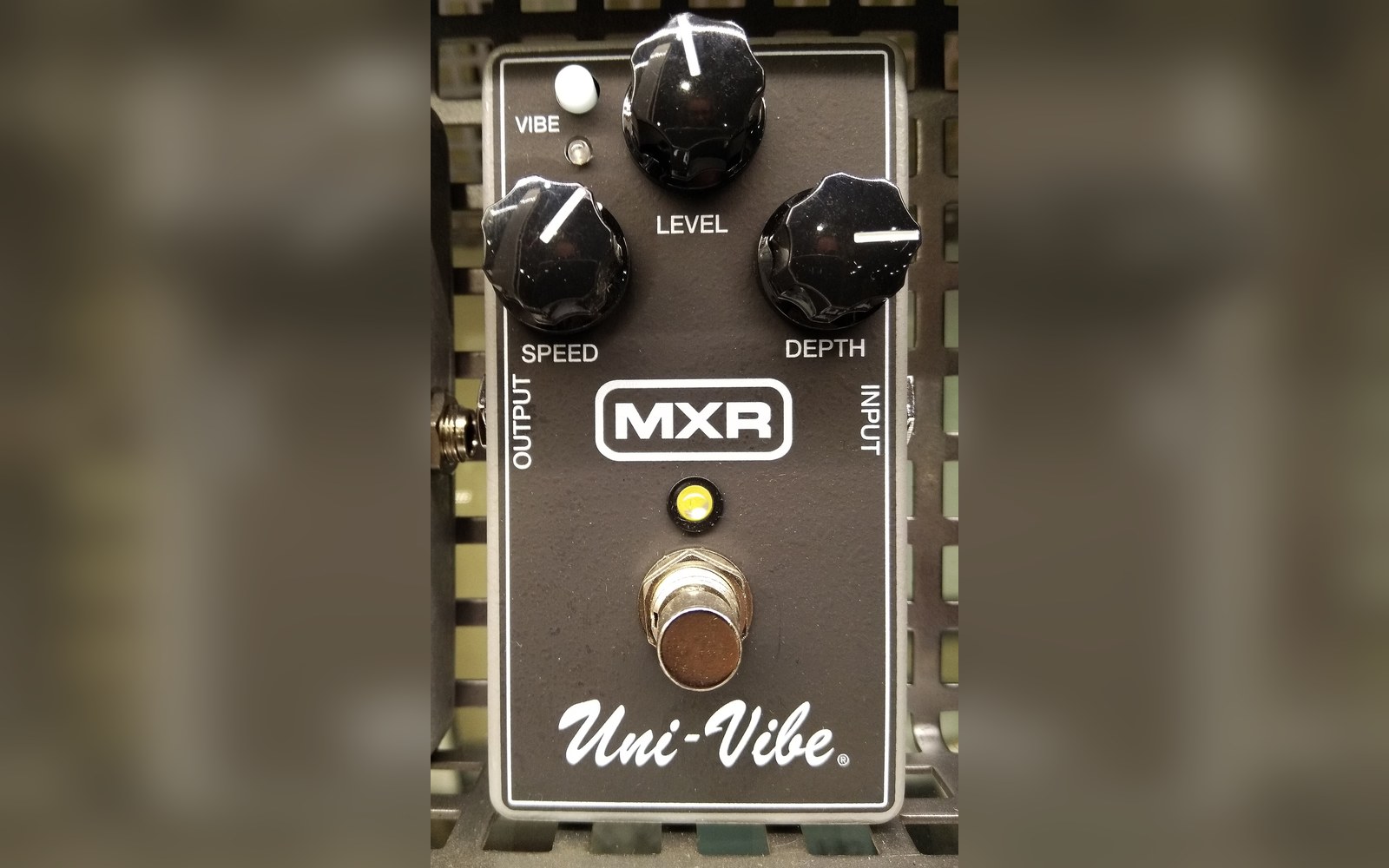
The chorus pedal works by splitting a dry guitar or bass signal, delaying one copy by a few milliseconds, and modulating that delay with a low-frequency oscillator so the pitch drifts fractionally and continuously against the original. The result is the sensation of several instruments slightly out of phase with each other — a widening, a shimmer, a mild coldness. On a clean guitar tone, through a solid-state amplifier run at low volume, it produced exactly the detached, aqueous quality that differentiated post-punk guitar from the driven midrange of what came before. The Boss CE-1 and Roland Chorus Echo were both in regular use by the early 1980s; neither was expensive relative to other studio outboard gear. On bass — as in much of the work produced under the Factory Records umbrella — the effect thickened the low end without adding warmth, a distinction that matters to the ear even when a listener cannot name it.
The three signal paths
| Device | What it does to the signal |
|---|---|
| Chorus pedal | Splits the signal and modulates one copy to produce shimmer and width; strips warmth from the guitar |
| Drum machine | Analogue or early digital synthesis — no dynamic variation, no room noise, tempo locked |
| Plate reverb | Suspended steel sheet; bright tail, synthetic space with no real-room equivalent |
Table scrolls sideways →
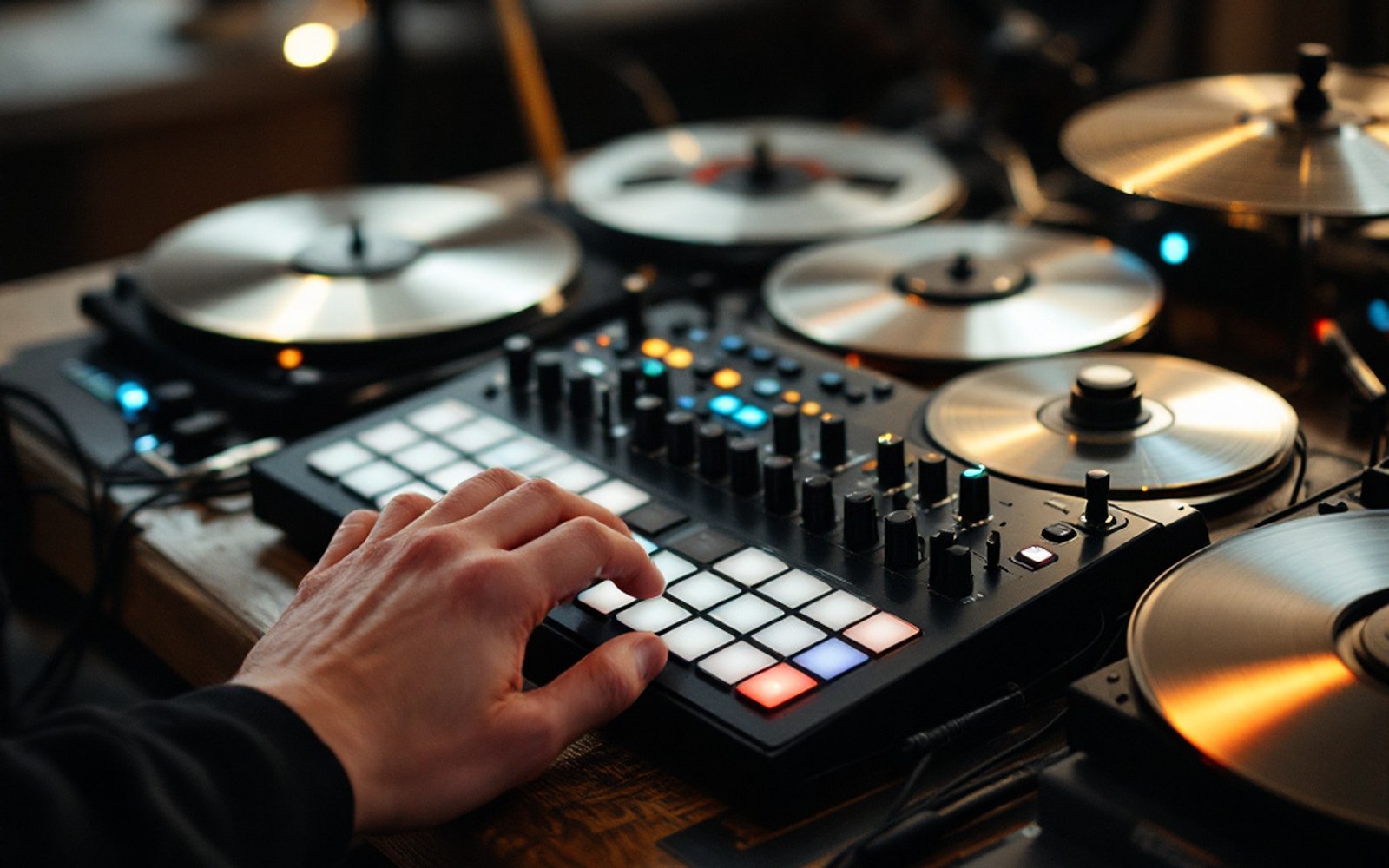
The drum machine’s role was more structural. Early affordable units — the Roland TR-606, the TR-808, the slightly later TR-707 — used analogue synthesis or early digital samples to produce percussion sounds that bore a family resemblance to acoustic drums while refusing to sound like them. The attack on a programmed kick was faster and more consistent than any human foot; the decay could be dialled in precisely; the tempo never drifted. What this produced sonically was a rhythmic foundation with no dynamic variation between bars, no room noise, no stick rattle. Producers did not mask these qualities — they emphasised them, sometimes running the machine’s output completely dry into the desk. Martin Hannett’s work in Manchester exploited the gap between the machine’s clinical pulse and the live instruments above it, building tension from the contrast rather than trying to resolve it.
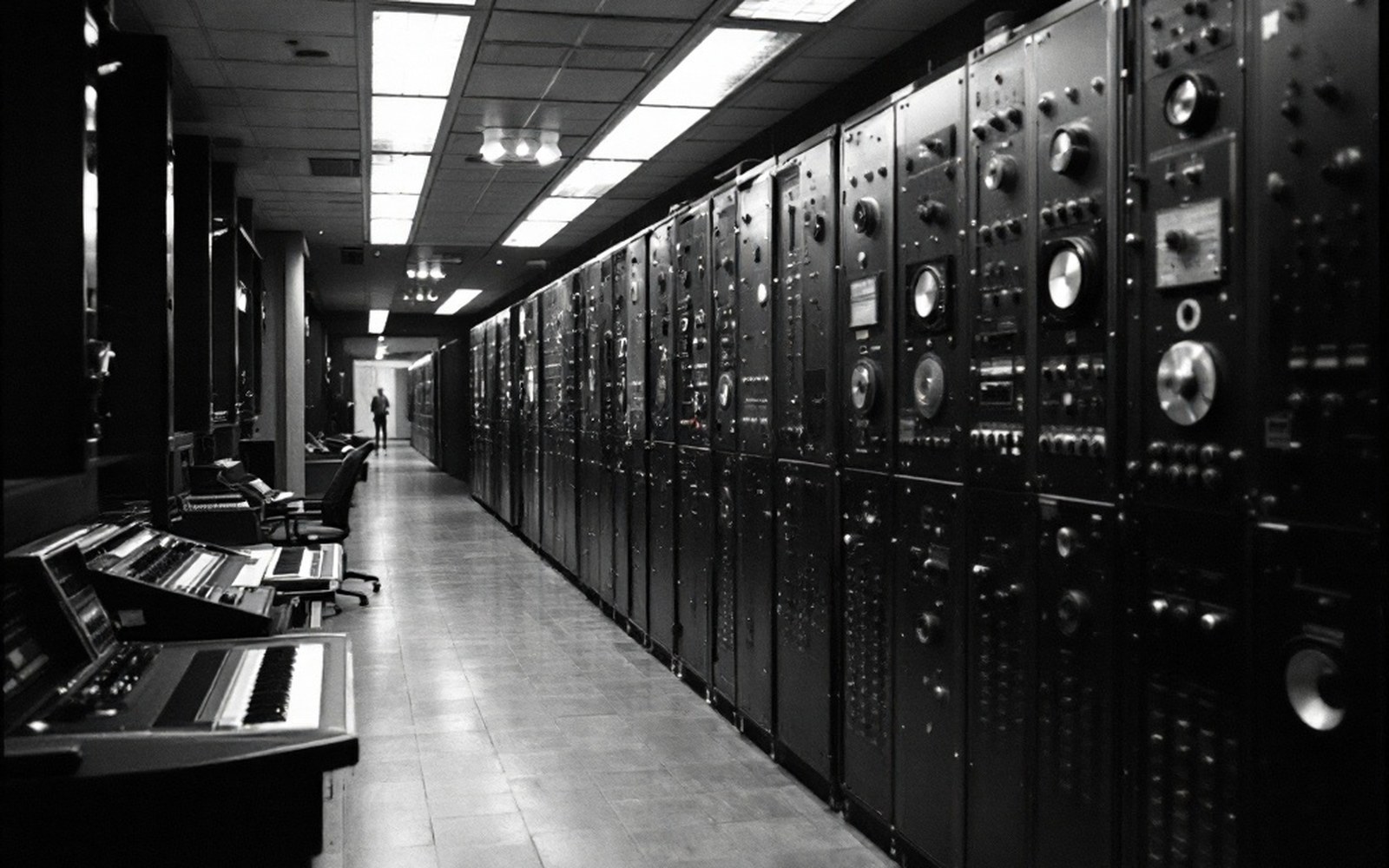
The plate reverb arrived last chronologically among the three, though it predates them both as a technology. A plate unit suspends a large sheet of thin steel under tension inside a sealed case; a transducer drives the plate and contact pickups read the vibrations that spread across its surface, producing a dense, smooth reverb tail with a character quite unlike a real acoustic space. EMT, the German manufacturer whose Model 140 defined the standard, had been producing the units since the late 1950s. By the late 1970s, plates were common enough in mid-tier studios to be an accessible rather than a luxury option. Applied to vocals, drums or entire mixes, a plate reverb added size without muddiness — the tail was bright and fast-decaying enough not to smear transients. On the vocals that define much of the goth adjacency of the period, it created a sense of a very large, very cold room that existed nowhere in physical reality. The object itself is worth a page of its own.
What makes the combination legible as a genre marker is not any one of the three elements but the way they interact in a mix. Chorus on the guitar pushes it sideways in the stereo field and removes its warmth; the drum machine sits below without natural room sound of its own; the plate reverb supplies a synthetic space that ties the elements together without making them sound as if they were recorded in the same place at the same time. The result is a coherence that is also, paradoxically, a kind of isolation — each sound present, each sound separate, the overall effect suggesting distance rather than intimacy. That quality, more than any specific tempo or lyrical concern, is what a listener is responding to when they say: yes, that sounds like that.
Key hardware names
| Unit | Note |
|---|---|
| Boss CE-1 | Chorus unit in regular early-1980s use, alongside the Roland Chorus Echo |
| TR-606 / 808 / 707 | The affordable Roland drum machines central to the period |
| EMT Model 140 | The plate reverb unit that set the standard from the late 1950s onward |
Table scrolls sideways →
Related pages